

What they are, where to use them, and how to choose the right pattern and colour for your home.
What are tessellated tiles?
Tessellated tiles are individual tiles in geometric shapes — squares, octagons, hexagons, triangles, and more — laid together to form a continuous patterned floor. The word tessellate means to fit together without gaps, which describes exactly how the tiles work: each shape interlocks with the next to create a seamless surface.
A tessellated floor has three components: the field pattern itself, a border that frames it, and a filler tile that acts as a buffer between the border and the wall edge. Decorative encaustic tiles and step treads can be added to complete the floor.

Tessellated tiles have been used in Australian homes since the 1880s. They remain one of the most durable and distinctive flooring options available — equally at home in a Victorian terrace, a Federation bungalow, or a contemporary house.
Are all tessellated tiles the same quality?
No — and the difference matters significantly for appearance, performance, and longevity.
The best tessellated tiles are made from fully vitrified porcelain. Vitrification is a firing process that presses material particles so tightly together that water and liquids have almost no ability to penetrate the surface. This makes the tiles non-porous, stain-resistant, and extremely durable — without needing to be sealed.
-
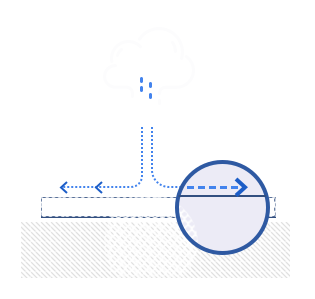
Winckelmans Impervious
Material particles are pressed very tightly and fired, meaning water and other liquids have a far more difficult time penetrating the surface. -
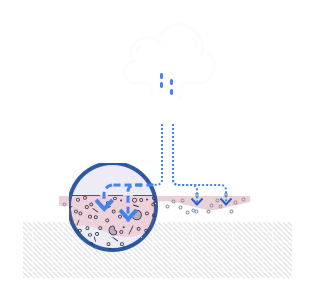
Others Pervious
A less dense, non-vitrified tile, results in pockets of air and imperfections, meaning water damage and staining if not sealed correctly.
Lower-quality tessellated tiles are made from non-vitrified or semi-vitrified material. These have air pockets and imperfections in the body, making them susceptible to water damage and staining if not sealed correctly — and sometimes even when sealed.
At Olde English Tiles, we use unglazed, fully vitrified porcelain tiles made by Winckelmans, a family company based in northern France with over 120 years of manufacturing history. Winckelmans tiles have a porosity level of 0.1%–0.5% — below the European standard for porcelain — and come in 32 plain and 7 speckled colours with full-body pigmentation, meaning the colour runs through the entire thickness of the tile. At 9mm thick, they are 3mm thicker than most tessellated tiles on the market, making them more resistant to chipping and significantly more durable over time. Their square edges (as opposed to the cushioned edges common on cheaper tiles) give finished floors a sharper, more defined appearance.
Where can tessellated tiles be used?
Tessellated tiles can be laid anywhere, inside or outside. The most common applications are:
Externally: front pathways, verandahs, entry steps, pool surrounds, and courtyards. Tessellated tiles have been used on Australian verandahs and paths for well over a century and remain one of the most practical choices for these areas — durable, slip-resistant, and unaffected by UV exposure.
Internally: kitchens, bathrooms, hallways, dining rooms, and fireplace hearths. Their geometric versatility means they work as a feature floor in almost any room, and they can be laid in both straight and curved areas.


Do tessellated tiles only suit heritage homes?
No. While tessellated tiles are a defining feature of Victorian, Federation, and Art Deco homes, they work equally well in contemporary architecture. Architects and designers increasingly use them to add character to modern homes — particularly in front pathways, hallways, and bathrooms.
For contemporary settings, the key is restraint in the pattern: a pared-back two or three colour palette, on-trend pastels, a simple geometric layout, or a tessellated mosaic floor tend to work better than the more intricate multi-piece patterns suited to period homes.


How do I choose the right tessellated tile pattern for my house?
There are no hard and fast rules about which patterns and colours you can use where. You may have a Victorian home, but prefer a simple tile pattern to the more traditional look of an intricately patterned floor. Or perhaps you have a contemporary home and love the idea of creating contrast with a heritage-style patterned path or verandah. It’s all about creating a look you’ll love coming home to.

Creating a harmonious look with tiles is less about your home’s architecture and more about choosing colours that compliment the space. When selecting tile colours for a pathway or verandah, for example, consider the colour of your home’s facade, your landscaping and the streetscape. Pick up highlight colours in details such as leadlight windows, fretwork, metalwork and window trims for a cohesive and considered look.
Pick up highlight colours in details such as leadlight windows, fretwork, metalwork and window trims for a cohesive and considered look.
And don’t underestimate the power of contrasts; if you’re looking to make a feature of your tessellated floor, try inverting the colour palette. For a rich brick or charcoal-painted facade, for example, create impact by opting for a lighter-toned tile pattern for your front path and steps.


The same principle applies for your interior; in a kitchen with white-washed walls and joinery, create wow factor with a dark, intricately patterned floor. Or, if you’ve chosen to make a statement in a bathroom or living area with a bold, patterned floor, keep the rest of the space pared-back and simple. For a subtle sense of flow, consider picking up one or two of the tile colours in your soft furnishings, towels or joinery detailing.


How do I choose a tessellated tile pattern for my home's era?
Pattern choice is guided more by colour than by the pattern itself — the same pattern can read as Victorian or Federation depending on the palette used. That said, certain patterns are more closely associated with particular eras, and the following is a guide to historically appropriate choices.
Colonial 1788-1840

Georgian in influence: restrained, proportional, mathematical. Original floors used no more than two or three colours — ochre, charcoal, white. Simple geometric patterns with monochromatic palettes are most appropriate. Stone combinations (sandstone, marble, slate) alongside tessellated tiles are also characteristic of this period.
Get the Colonial look
Rational, mathematical & sophisticated.-
Monochromatic Colours
Primarily light to dark shades in a desaturated hue i.e. White, Black, Charcoal, Light Grey, Off White -
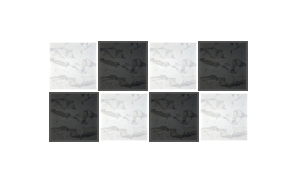
Explore tessellated stone
Combine stones such as sandstone, marble, slate and granite with tessellated tiles. -
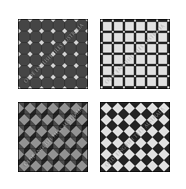
Simple Tessellated Geometry
Patterns were reflective of the era's style: clean, ordered and rational.
Victorian 1840-1890

Early Victorian homes were simple; mid-to-late Victorian homes became significantly more ornate, with cast-iron lacework, coloured glass, and decorative ceilings. Tile patterns followed suit — geometrically complex patterns like the Bristol, Devon, Brighton, and Fitzroy are characteristic of this era. Colour palettes were vivid: red, oatmeal, and coffee as dominant tones, with accents of black, white, sky blue, pale green, mauve, and pink. Multi-coloured encaustic tiles were widely used as decorative inserts.
Get the Victorian Look
Expressive patterns & vivid colours-
Vivid Floor Colours
Components were primarily earth tones, with accents of bold colour and ‘non-earthy’ tones like: aqua, pale green, dark green, pink and mauve. -
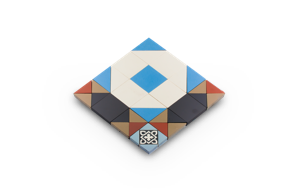
Complex Tile Patterns
Complex tile patterns that incorporate multiple shapes and colours as well as a formal border -
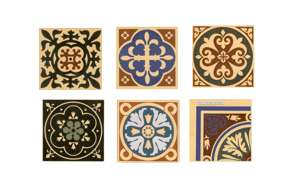
Multi-Coloured Encaustics
This era sees a great deal of Encaustics used in the design of the pattern. Encaustics in this era were often multi-coloured (as opposed to single-coloured in Federation homes).
Federation 1890-1915

Federation homes — typically red or dark-brown brick, with ornate timber fretwork and leadlight windows — are the most common setting for tessellated tiles in Australia. The octagon and dot pattern surged in popularity during this period. Colour palettes became earthier and more restrained than Victorian: brown, leafy green, dark grey, and red, influenced by the Arts and Crafts movement. Encaustics continued to be used, but in single colours only (typically black on white) rather than the multi-coloured versions of the Victorian era.
Get the Federation look
Earthy Colours & single-coloured encaustics-
Earthy Colours
Replace vivid colours with Australiana earthy colours and subtle tonal harmony. -
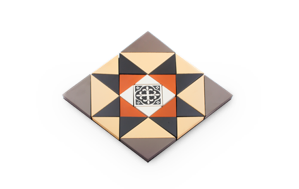
Modestly complex patterns
Slightly less complex than Victorian, with the Octagon & Dot surging in popularity in this period. -
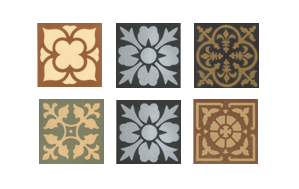
Single-Coloured Encaustics
The use of single coloured encaustics (e.g. black on white) endured well into the first decade, but not multi-coloured encaustics.
Art Deco 1930-1950
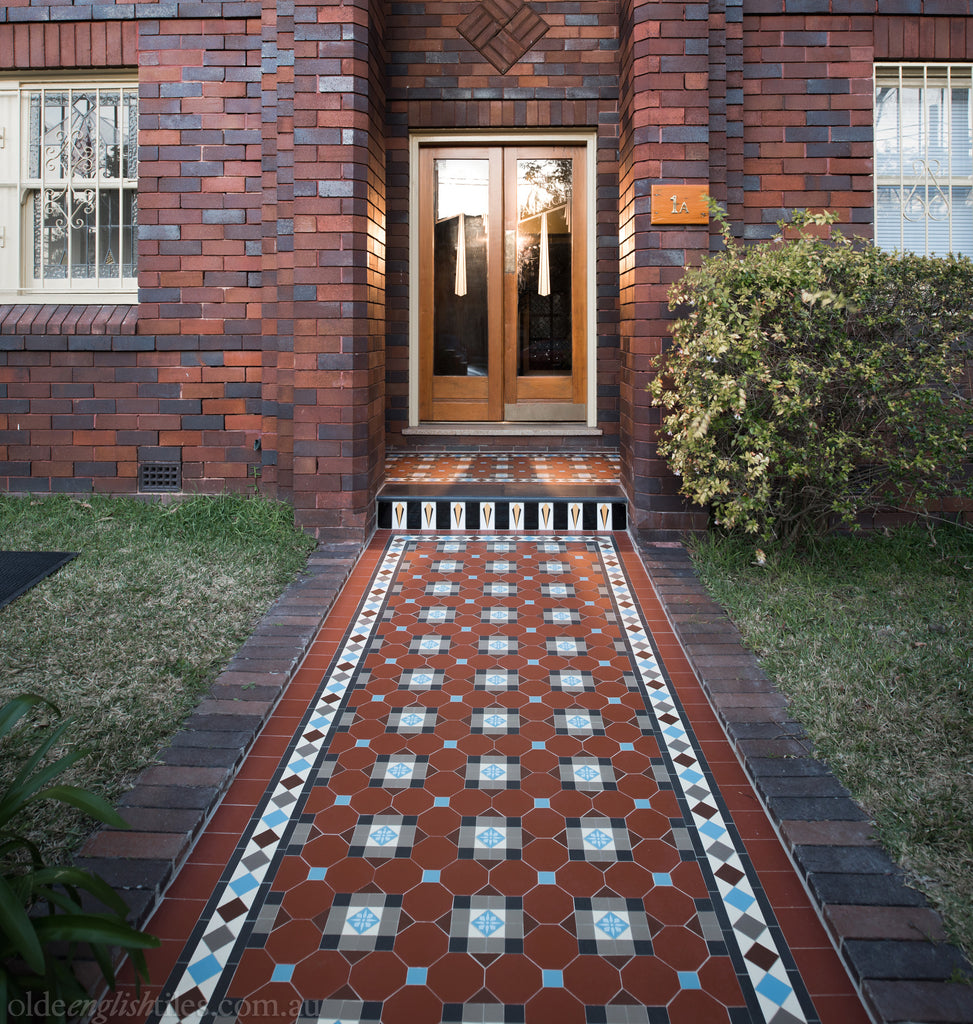
Art Deco homes used tessellated tiles for maximum visual impact — striking geometric patterns in bold colours including yellow, black, and grey. Mosaic tiles are particularly well suited to the characteristic angular motifs of the period: chevrons, zigzags, and stepped forms. A contrasting decorative border is also a common feature of Art Deco floors.
Get the Art Deco look
Mosaics in classic, elegant colours-
Classic Colours
Colour schemes that embrace hard colours like Yellow, Black, Grey and White reflect the boldness and almost luxurious character of the period. -
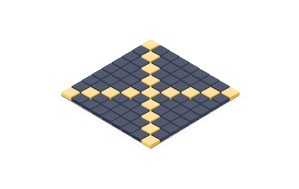
Use Mosaics
Mosaic tiles enable the characteristically angled patterns and geometric accents that were so pertintent to the style. -

Embrace Angular Motifs
Motifs such as the chevron, zig zag and stepped forms hark back to this era, and are great elements to any floor or wall Art Deco project.
Californian Bungalow 1915-1940

The Cal Bung has a warmer, more laid-back character than Federation. Tile palettes are similar — earthy, warm, and restricted — but patterns simplify further. Three to four colours maximum, minimal geometry, and encaustics used sparingly for occasional accents.
Get the California Bungalow Look
Similiar to Federation-
A warm colour palette
Very similiar to Federation – a restricted colour palette of warm, earthy tones to match the signature brick exterior. -
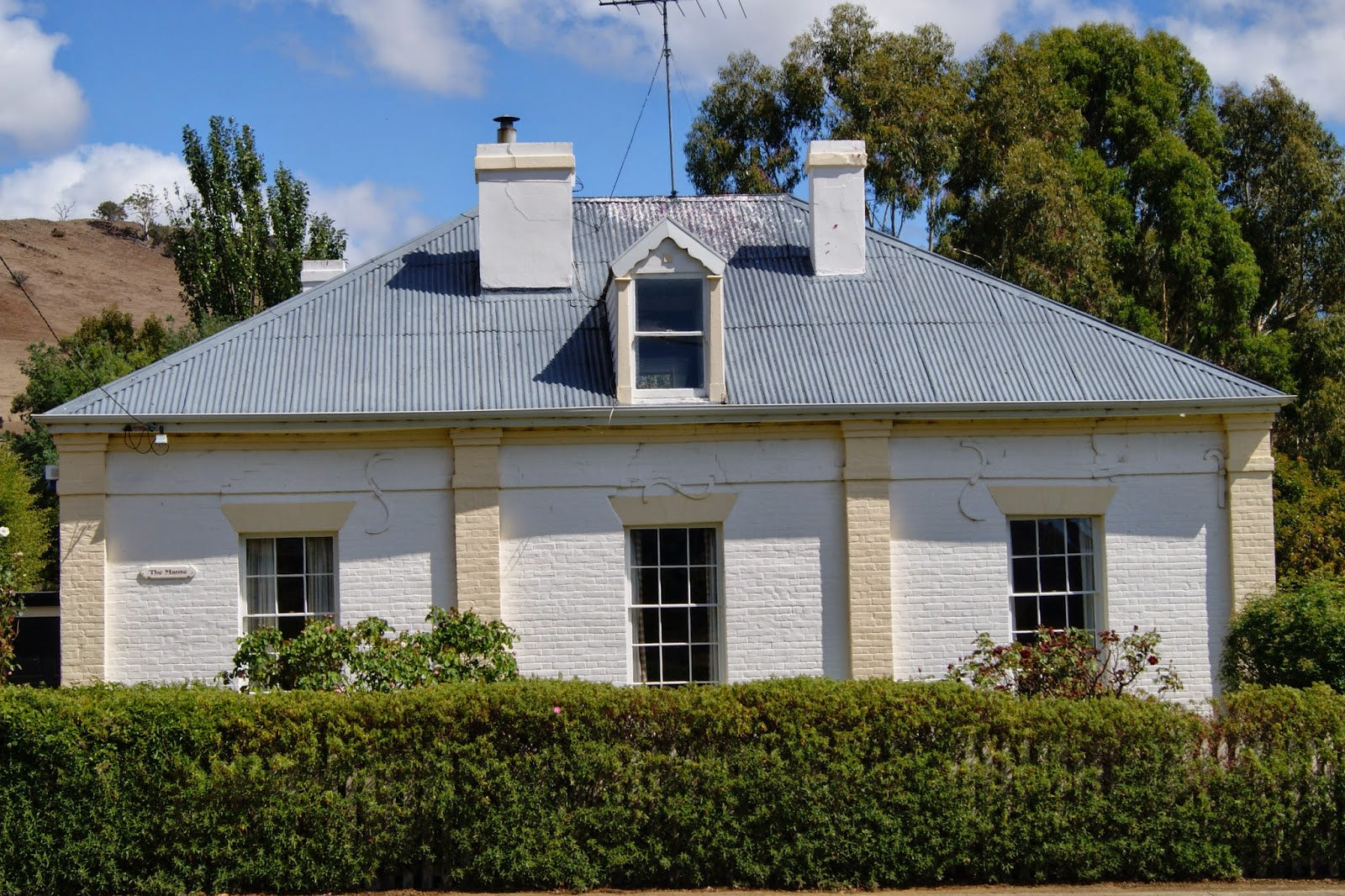
Simple patterns
Minimal pattern geometry, borders and no more than three to four colours -
Single-Coloured Encaustics
The use of encaustics used sparingly (in Cali Bungalow) throughout the design, add pops of flair and character.
How do I choose colours for a tessellated tile floor?
The most important principle: colour harmony matters more than pattern correctness. A pattern that is slightly outside its period will look right if the colours are well chosen; a period-correct pattern in the wrong colours will look wrong.
For an external pathway or verandah, look at the whole facade before choosing: the brick or render colour, any leadlight windows, fretwork, metalwork, and window trims. Pick up accent colours from these details for a cohesive result.
If you want to make the floor a feature, consider inverting the colour logic: a dark brick facade pairs well with a lighter-toned floor; a light-painted house reads well against a darker, more dramatic floor.
For interiors: in a kitchen with white walls and joinery, a dark, intricate floor has maximum impact. In a bathroom where the floor is already making a statement, keep the rest of the space simple. One or two tile colours carried into soft furnishings, cabinetry, or towels creates a sense of considered flow.
Because all Olde English Tiles tessellated patterns are supplied as loose components, any colour in the Winckelmans range can be substituted in any pattern. This means complete freedom to adapt a historic pattern to a contemporary palette, or to match an existing colour scheme precisely.
Which patterns are available in tessellated tiles?
You can create just about any pattern you like with tessellated tiles – the only limit is your imagination.
At Olde English Tiles, we have multiple tile patterns for you to choose from, ranging from simple and minimalist looks to decorative and complex ones. To help you save time and narrow your search, patterns are curated into collections to suit different architectural periods – Colonial, Federation, Victorian, Art Deco and California Bungalow.
Types of tessellated patterns


These patterns are just your starting point – each one can be customised to suit your home’s palette and style using different tile colours, shapes and sizes. And if you can’t find exactly what you’re looking for, we can create a bespoke tessellated pattern for your home.
How much do tessellated tiles cost?
The cost of the tiles themselves varies with pattern complexity — a simple checkerboard or octagon and dot pattern uses fewer tile shapes and is generally less expensive than an intricate multi-piece pattern with a border and panels.
Installation is priced by the job, not by the square metre, because two floors of the same area can differ significantly in the preparation, access, and skill required. As a general guide, expect installation to cost a similar amount to the tiles themselves — though this is a rule of thumb, not a quote.
Tessellated tile installation is a specialist trade. The tiles are laid individually by hand, and pattern alignment across a complex geometric design — particularly in the irregular spaces common in heritage homes — requires significant experience. Olde English Tiles was founded by Antonino Gaudioso, who has over 50 years' experience in tessellated tile installation and has trained almost every tessellated tiler in the industry. Olde English Tiles operates its own in-house installation team and never subcontracts. If complications arise on site, we manage them directly.

When calculating the cost of a tessellated tile floor, you also need to factor in the cost of installation. Laying tessellated tiles is an art form that requires many years of experience to master, and you should expect to pay more for a skilled tessellated tiler than you would a standard tiler. The pattern is made up of loose, individual tiles, which are laid by hand to create a seamless, patterned floor – whatever the shape or complexity of the area.
While you might be tempted to skimp on the cost of installation, we really wouldn’t recommend it. The last thing you want is for sub-standard installation to ruin the look of your beautiful tiles or to have to pay for the entire floor to be re-done.
At Olde English Tiles, our head tiler has over 50 years’ experience laying tessellated tiles and has trained almost every tessellated tiler in the industry. All floors are quality-checked by tessellated experts with over decades of experience.
We operate an internal installation division and will never subcontract your work. What that means for you? If complications arise or plans need to change, we deal with it - not you.


How do I care for tessellated tiles?
Fully vitrified porcelain tessellated tiles require no sealing and minimal ongoing maintenance. A regular clean with a damp mop, warm water, and a small amount of detergent is sufficient to keep the floor looking as it did on the day it was laid. For a full aftercare guide, see our cleaning guide.
A note on pattern names
Many of Olde English Tiles' pattern names reference Sydney and Melbourne suburbs — Annandale, Woollahra, Petersham, Marrickville, and others. This is not coincidental: these suburbs contain some of Australia's highest concentrations of surviving heritage tessellated tile floors, and the patterns found there are the direct inspiration for the names.
Which tessellated tiles do you use at Olde English Tiles?
We use premium-quality unglazed, fully vitrified porcelain tiles for our tessellated floors. Our tiles are crafted in France by Winckelmans, a 120-year old family company recognised as one of the finest tile manufacturers in the world.

Winckelmans tiles come in 35 stunning, heritage colours, making it easy to create an authentic look for your heritage home, whatever the period.
The extremely high vitrification of Winckelmans’ tiles gives them superior strength and scratch and stain resistance. They are impervious to water and have a high slip rating, making them an ideal choice for high-traffic and moisture-prone areas in your home, such as paths, steps and pool surrounds.
At nine millimetres thick, Winckelmans’ tiles measure a full three millimetres thicker than most tessellated tiles you’ll find today. The result? A tougher floor that lasts the distance.
Winckelmans’ tiles have a natural, unglazed finish and a matte appearance – unlike the glossy ‘plastic’ sheen you’ll see in many other tiles on the market. Their full-body colour (the colour goes all the way through the tile) means they will look as beautiful as the day they were laid for decades.
We hope this guide has been helpful in terms of understanding more about tessellated tiles and how can they can be used to make a stylish yet functional impact in your space. If you’re ready to choose a pattern, browse our tessellated tiles today. Have more questions? Get in touch to discuss your flooring vision.
